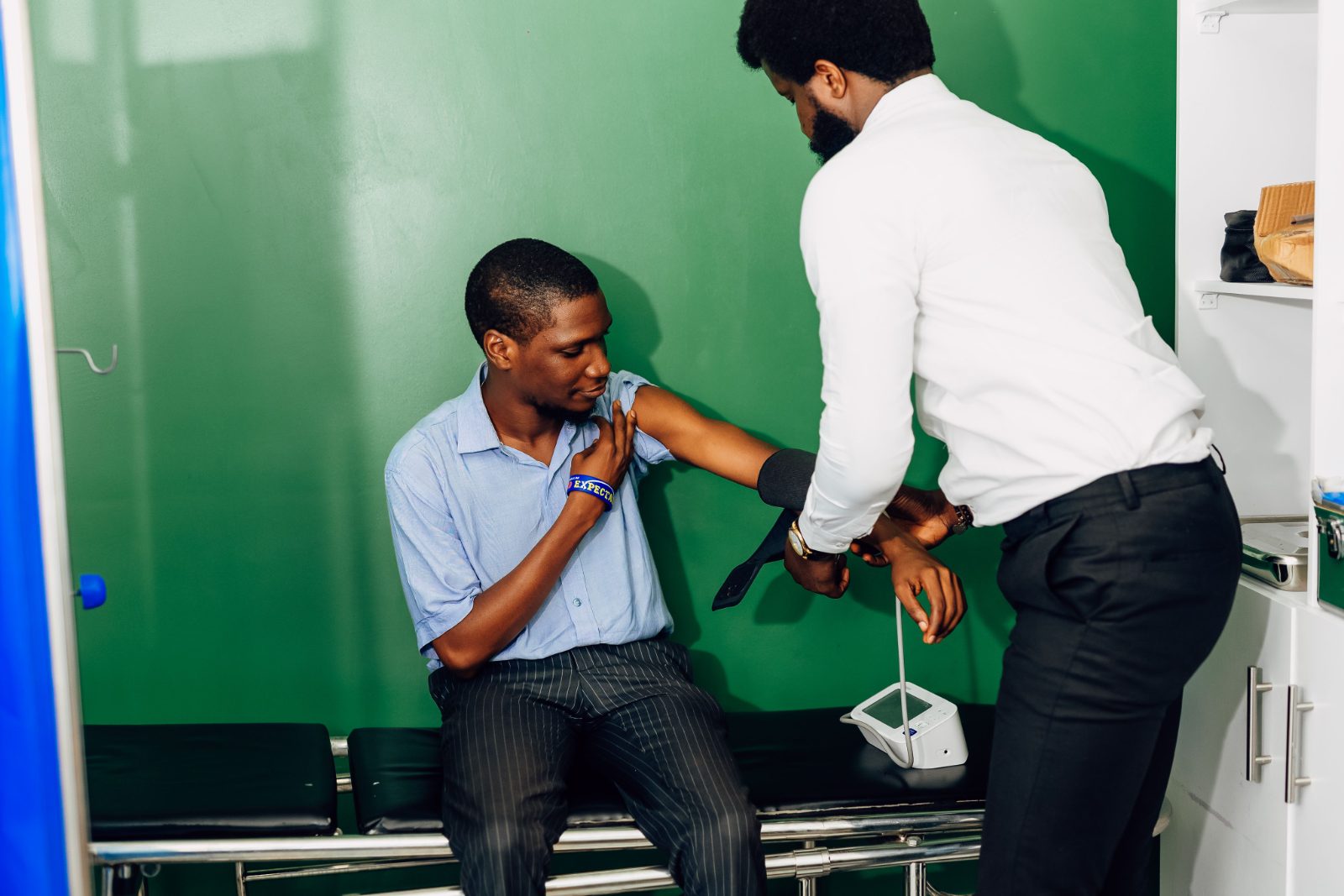
A twice-yearly shot cut new HIV infections to near zero in trials, and is now reaching Africa.
Twice-yearly lenacapavir prevented nearly all HIV infections in two large trials zero among 2,134 women in one and a version given every six months won FDA approval in 2025.
Verified · The Lumen Standard
The evidence
Evidence certainty · Not AssessableShow the evidenceHide
Every Lumen story clears five checks before it runs. Here is how this one is sourced, in the open.
Evidence certainty
Not AssessableStudy type not set · Rule v2.0
Rests on a source Lumen does not treat as evidence (a press release or unreviewed assertion). Recorded as an unverified claim; supports no reliance.
The five checks
Passed
Source tier
Peer-reviewed · New England Journal of Medicine (PURPOSE 1 AND PURPOSE 2)
Passed
Study type
Phase 1
Passed
Sample size (n)
8,538
Passed
Effect size (absolute)
PURPOSE 1, 0 vs 39 vs 16 infections; PURPOSE 2, 2/2,179 (99.9%), 96% reduction vs background
Passed
Disease burden
~3,000 HIV diagnoses a week among young women in southern Africa
Peer-reviewedBy Nathan Stanley Martanegara16 June 20261 min read
Why it matters: Most HIV prevention depends on taking a daily pill, which is hard to sustain; a twice-yearly shot that prevents nearly all infections could change the trajectory of the epidemic if it can actually reach the people who need it.
Lenacapavir, an HIV-prevention injection given just twice a year, showed near-total protection in two phase 3 trials and is now beginning rollout in Africa a potential turning point, since most prevention requires a daily pill. In PURPOSE 1, in young women in sub-Saharan Africa, there were 0 HIV infections among 2,134 women on lenacapavir, versus 39 of 2,136 on Descovy and 16 of 1,068 on Truvada. In PURPOSE 2, across men and gender-diverse people, there were 2 infections among 2,179 participants 99.9% protected a 96% reduction versus background incidence. The FDA approved injectable lenacapavir, given every six months, as PrEP in June 2025 based on both trials. Most important limitation: the science is settled; access is not. Per a late-2025 U.S. State Department briefing, the 2026 rollout covers about 10 African countries against a manufacturing capacity near 600,000 doses far short of need (re-verify these figures). Cost and supply, not efficacy, now decide the impact.